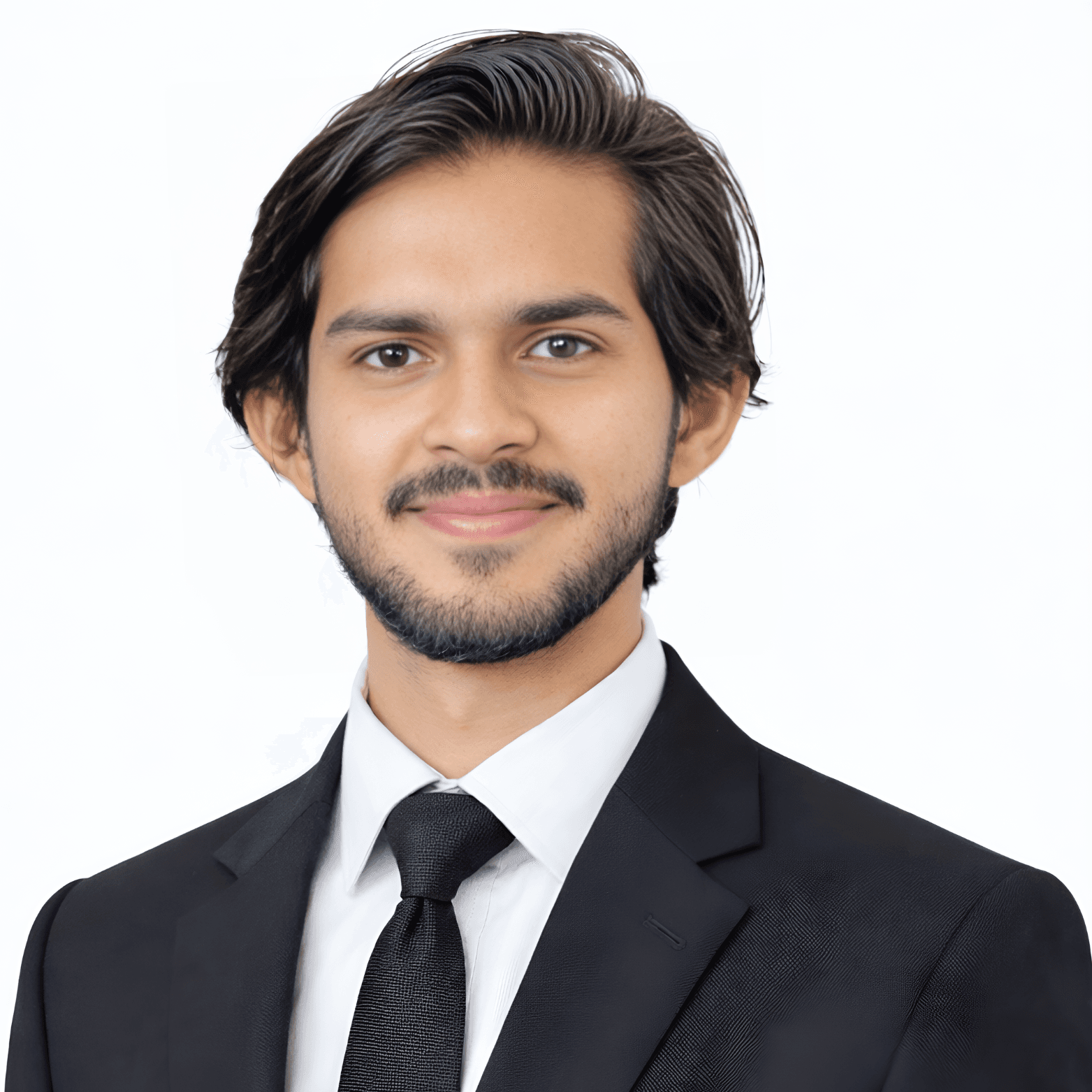
My Journey to Becoming a Full Stack Software Engineer

Where this started
My interest in software development grew during my Computer Science studies, which I started in 2024 at the University of Education. Like most people learning to program, the early stretch was mostly absorbing syntax and fundamentals. What actually changed things for me wasn't a specific class — it was the first time an idea I'd sketched out actually turned into a working application. That gap between "I have an idea" and "this idea now runs" is what made software feel like a field worth committing to, rather than just a subject I was studying.
Why Computer Science, specifically
I chose Computer Science because it sits at the intersection of creativity and rigor — you're not just implementing someone else's spec, you're deciding how to break a messy, ambiguous problem into pieces small enough to actually solve. That combination is what keeps it interesting even when the day-to-day work is unglamorous (and a lot of it is).
What actually engages me about problem-solving
The part I find most rewarding isn't any single technology — it's the arc from nothing to something working. Understanding the actual problem first, planning a reasonable approach, building it in pieces, and then improving it through iteration rather than trying to get it perfect on the first pass. That applies whether the "something" is a website, an automated workflow, or an AI-powered tool — the process is the same even when the tools change.
Why AI, specifically
Artificial intelligence represents one of the more significant shifts happening in software right now, and what draws me to it isn't the novelty — it's the practical case: using AI to remove repetitive work, and to build tools that solve a real problem rather than existing as a demo of "look, it uses AI." That distinction matters to me. It's easy to bolt a chatbot onto something for the sake of it; it's harder (and more useful) to design a feature where AI is actually the right tool for the job.
The real timeline so far
I want to keep this section to what's actually verifiable, not a polished narrative:
- 2024 — Started a Bachelor of Science in Computer Science at the University of Education.
- 2024 — Began learning modern web development and JavaScript in parallel with coursework.
- 2025 — Started building real-world portfolio projects rather than just tutorial-following exercises.
- 2025 — Began exploring AI application development and automation specifically.
- 2025 — Started taking on freelance-oriented software projects — under the Qaynova brand — and building a professional portfolio presence.
- 2026 — Building a production-grade personal portfolio with a genuinely CMS-driven architecture, PWA support, AI integration, and real SEO infrastructure (the site you're reading this on).
No claimed jobs, employers, or credentials beyond this — I'd rather this list be short and accurate than padded.
Mission and how I actually approach problems
My mission, in plain terms: build reliable, scalable, user-focused software through actual engineering discipline rather than shortcuts. My longer-term goal is to become a genuinely strong software engineer, build AI-powered products people actually use, and eventually grow Qaynova into something bigger than freelance project work.
The way I try to work: understand the real problem before writing code, plan before building, build incrementally, test continuously, and improve through feedback rather than rushing to call something "done." This isn't a unique philosophy — it's just the one I try to actually hold myself to, including on this site (its whole content architecture is built around never faking data that isn't real yet, which is a direct expression of this same principle).
Where this is heading
I'm currently focused on full-stack development, AI integration, workflow automation, and software architecture — not because those are trendy, but because they're the areas where the "idea to working thing" gap is currently most interesting to me. That'll probably shift over time, and when it does, I'd rather write about the shift honestly than pretend the plan never changes.
Frequently Asked Questions
3 questions · Quick answers
FAQ · 3 QUESTIONS · QUICK ANSWERS